Two Worlds, One Kid: How Brown Moms Can Raise Children Who Move Between Cultures with Confidence
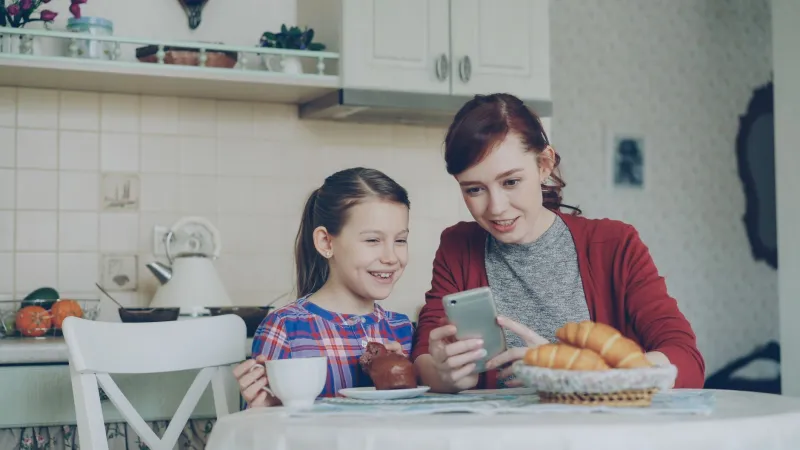
My daughter came home from third grade one afternoon and announced that she wanted to go by "Lily" instead of her actual name, Layla. Not because she didn't like her name — she'd always loved it. But a classmate had stumbled over it twice during roll call, and the secondhand embarrassment had apparently been enough.
I sat with that for a moment. Then I said, very calmly: "Absolutely not, baby. But let's talk about it."
What followed was one of those unexpected, kitchen-table conversations that ends up shaping a kid's entire relationship with their identity. We talked about why her name was chosen. Where it came from. What it meant. We talked about how names get mispronounced all the time, and what that says about the person struggling — not about her. By the end, she was practicing saying her name slowly and clearly, like she was teaching someone a gift.
That's code-switching work. Not the "change yourself to fit in" kind — the navigate the world without losing yourself kind. And it's one of the most important things brown moms are doing right now, even when we don't have a name for it.
What Code-Switching Actually Means for Our Kids
The term gets used a lot, and it's worth defining clearly. Code-switching, in the cultural and linguistic sense, is the ability to shift your language, tone, behavior, or presentation depending on your environment. Black communities have long articulated this experience in the American context — and brown families live a version of it too.
For the children of South Asian, Latin American, Middle Eastern, and other immigrant families, code-switching might look like:
- Speaking English with friends and a mix of Urdu, Spanish, or Arabic at home
- Packing a culturally different lunch and knowing how to deflect questions about it
- Being "American" at school and shifting into a different set of expectations at family gatherings
- Navigating comments about their appearance, religion, or home life from peers who don't share their background
Done well, this is a genuine superpower. Kids who can move fluidly between cultural contexts develop empathy, social intelligence, and adaptability that monocultural kids often have to work harder to build. But done without intention — or when it tips into shame and self-erasure — it becomes something else entirely.
When It's a Skill vs. When It's a Warning Sign
Here's the line I've come to: healthy code-switching is additive. It adds a layer of social fluency without subtracting identity. Unhealthy code-switching is subtractive — it requires your child to make themselves smaller, quieter, or less visible to feel safe or accepted.
Some signs that code-switching has crossed into something worth addressing:
- Your child consistently avoids mentioning their cultural background or family traditions to friends
- They express shame or embarrassment about food, holidays, language, or relatives
- They resist participating in cultural events or family gatherings that they previously enjoyed
- They use language like "we're weird" or "my family is so embarrassing" in ways that feel self-rejecting rather than playfully eye-rolling
None of these are catastrophes. They're invitations for conversation. But they do need attention, because the goal is never for our kids to choose between their worlds — it's to help them hold both.
Real Talk from Brown Moms in the Trenches
Preeti, a Tamil mom in the Chicago suburbs, shared something that hit home: "My son started refusing to speak Tamil at home around age ten. He said it was 'pointless.' I didn't push back hard enough, and by the time he was a teenager, he'd lost most of it. Now at 22, he's grieving that loss. He wishes I'd been more insistent."
On the flip side, Marisol, a Mexican-American mom in Houston, took a different approach with her daughter. "I made Spanish non-negotiable at home, but I also made sure she understood why. It wasn't about rules — it was about connection. Her abuela only speaks Spanish. If she loses the language, she loses her grandmother. That framing changed everything."
And then there's Fatima, a Moroccan-American mom in New Jersey, who focuses less on language and more on narrative. "I tell my kids stories constantly. About Morocco, about our family history, about what it meant to come here. I want them to know that their identity has a story — it's not just a checkbox on a form."
Three different approaches, but the same underlying intention: keep the thread intact.
Age-Appropriate Ways to Start the Conversation
You don't have to wait for a "Lily moment" to start talking to your kids about identity and code-switching. Here are some conversation starters that actually work at different ages:
Ages 5–8:
- "Did anything feel different or funny today at school? Like something that made you feel like you stood out?"
- "What's something about our family that you really love? What's something you wish was easier to explain to friends?"
Ages 9–12:
- "Have you ever felt like you were acting differently around your friends than you do at home? What did that feel like?"
- "If someone at school said something about [your religion/food/language], what would you want to say back?"
Ages 13 and up:
- "Do you ever feel pressure to be less [cultural identity] in certain spaces? Let's talk about where that pressure comes from."
- "What parts of our culture do you want to carry into your adult life? What feels less important to you?"
That last one is important. Giving teenagers agency over their cultural identity — rather than demanding compliance — builds genuine ownership. Kids who choose their heritage hold it differently than kids who have it imposed on them.
Practical Moves That Actually Help
Make the culture visible and joyful, not just obligatory. When cultural practices are tied to warmth, celebration, and good food — rather than only rules and obligation — kids build positive associations that stick.
Create spaces where both worlds coexist. Invite school friends to cultural celebrations. Cook traditional food alongside American favorites. Let your kids see that integration is possible, not just alternation.
Normalize the navigation. Tell your own code-switching stories. Let your kids know that you also shift registers depending on context — at work, with family, with friends — and that this is a skill, not a split personality.
Call out othering without making it traumatic. When a classmate says something ignorant about your child's lunch or holiday, help your kid find language that's confident without being combative. "Actually, it's called [X] and it's amazing" is a full sentence.
The Bigger Picture
Raising a child between two cultures in America in 2024 is genuinely complex work. It requires us to hold space for their American identity while also refusing to let their heritage become a footnote. It asks us to be honest about the realities of being visibly "other" in spaces that weren't always designed with us in mind — without passing our own wounds onto them.
But here's what I keep coming back to: kids who grow up knowing who they are — really knowing, in their bones — are more resilient. They handle hard things better. They build deeper relationships. They move through the world with a kind of groundedness that's genuinely rare.
That's the gift we're building, one kitchen-table conversation at a time.
And Layla? She's nine now. Last week she corrected her teacher's pronunciation without even flinching.
We're doing okay.