Superwoman Doesn't Live Here Anymore: The Brown Mom's Guide to Finally Asking for Help
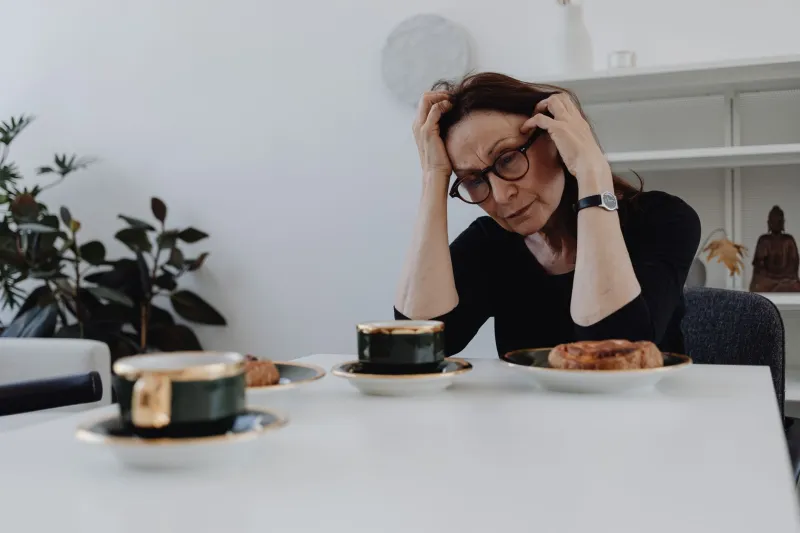
There's a version of my mother that lives in my head rent-free. She's cooking a full meal while simultaneously helping with homework, fielding a phone call from a relative three time zones away, and somehow also ironing a school uniform for the next morning. She never asked anyone to step in. She never looked tired — or at least, she never let us see it.
I used to think that was something to aspire to.
Now, somewhere between my second kid's school pickup and the third load of laundry I forgot to switch, I've started to wonder: what exactly did all that silent sacrifice cost her? And more urgently — what is it costing me?
The Myth We Inherited
Let's be real about where this comes from. For many of us, our mothers, grandmothers, and aunties modeled a very specific kind of womanhood. You handle it. You don't burden others. You certainly don't broadcast your struggles — not to your in-laws, not to your own parents, and definitely not to your husband's family, who are always, somehow, watching.
There's a cultural script that runs deep in brown households: a woman who needs help is a woman who isn't managing well enough. And "not managing" carries a particular kind of shame that goes beyond personal failure. It reflects on your upbringing, your family, your worth as a wife and mother. So you manage. You manage until you're running on fumes and calling it strength.
The problem isn't that our mothers were weak. They weren't. The problem is that we confused endurance with empowerment — and we've been passing that confusion down like a family heirloom.
What Emotional Labor Actually Looks Like
Here's what nobody puts on the to-do list: remembering that your kid needs a costume for school on Friday. Tracking which relative's birthday is coming up and making sure a card gets sent. Knowing that your partner is almost out of the specific allergy medication they always forget to reorder. Mentally holding every appointment, preference, conflict, and deadline for every single person in your household.
That's emotional labor — and for most brown moms, it's a full-time job stacked on top of every other job we're already doing.
Research consistently shows that women carry a disproportionate share of this invisible work, but for brown moms there's an added layer. We're often managing not just our immediate family but an extended network of obligations — cultural events, family expectations, community commitments — that our white counterparts simply don't have on their radar. We're the ones who know when Nani needs a doctor's appointment rescheduled and when it's appropriate to bring food to a neighbor's home after a loss. This is beautiful, community-building work. It is also exhausting when it's always, only, yours.
Why We Don't Ask
So why don't we just... ask for help?
If you're laughing right now, you already know the answer. But let's name it anyway.
First, there's the guilt. Asking for help feels like admitting you can't handle it — and we've been conditioned to handle everything. Second, there's the labor of asking itself. Explaining what you need, to whom, in a way that doesn't create more work for you, is exhausting before you've even gotten any relief. Third — and this one is big — many of us genuinely don't believe we deserve it. We were raised in households where self-sacrifice was so normalized that prioritizing our own needs feels almost transgressive.
And then there's the response we fear. The subtle raised eyebrow from a mother-in-law. The well-meaning but loaded comment about how she managed with four kids and no dishwasher. The implication that needing support makes you less of a woman, less of a mother, less of whatever it is you're supposed to be.
What Redefining Help Actually Looks Like
Here's the reframe that changed things for me: asking for help is not a confession of failure. It is an act of clarity about what you value and what you need to sustain it.
Practically, that can look like a lot of different things depending on your situation.
Delegate without apologizing. Your kids can do more than you're probably letting them. A seven-year-old can set the table, sort laundry, and pack their own backpack. A ten-year-old can make a simple breakfast. We sometimes do everything for our children in the name of love, but we're actually just adding to our own load while robbing them of competence. Let them help. Expect them to help.
Be specific with your partner. "I need help" is too vague to act on. "I need you to handle bath time every Tuesday and Thursday without me having to remind you" is actionable. The more specific you are, the less you have to manage the management of the task. That's the goal.
Outsource without shame. If you can afford a grocery delivery service, a cleaning person twice a month, or a meal kit subscription — use it. The guilt around spending money on convenience is real, but so is the cost of burning out. Your time and mental bandwidth have value. Act like it.
Build a real support network. Not just the group chat where you vent, but an actual reciprocal network of people you can call on. Other moms who will pick up your kid when you're stuck. Friends who will bring food when things fall apart. Community is not a luxury — it's infrastructure.
Talk to your own mother differently. This one is harder. But some of us have moms who would actually love to help if we stopped performing fine in front of them. The conversation might be uncomfortable. It might also be the most honest exchange you've had in years.
The Permission You've Been Waiting For
I know what some of you are thinking. That sounds nice, but my situation is different. My family wouldn't understand. My husband doesn't get it. I don't have the support system you're describing.
I hear that. And I'm not here to pretend the structural stuff is easy to change or that every brown mom has the same resources. But I do want to push back gently on one thing: the idea that you need to wait until circumstances are perfect before you're allowed to stop carrying everything alone.
You don't need permission from your mother-in-law. You don't need to earn rest. You don't need to hit a wall before you're allowed to ask for support.
The women we were raised by were extraordinary. They were also, many of them, quietly depleted in ways they never let us see. We don't have to replicate that as proof of love. We can love our families fully and still insist on being cared for in return.
Superwoman is a great comic book character. She is a terrible role model for actual human mothers trying to raise actual human children while staying sane.
Put her down. Ask for help. Not because you're struggling — though it's okay if you are — but because you deserve a life that doesn't require you to disappear into it.