'We're Fine': Decoding the Emotional Language Brown Moms Actually Speak
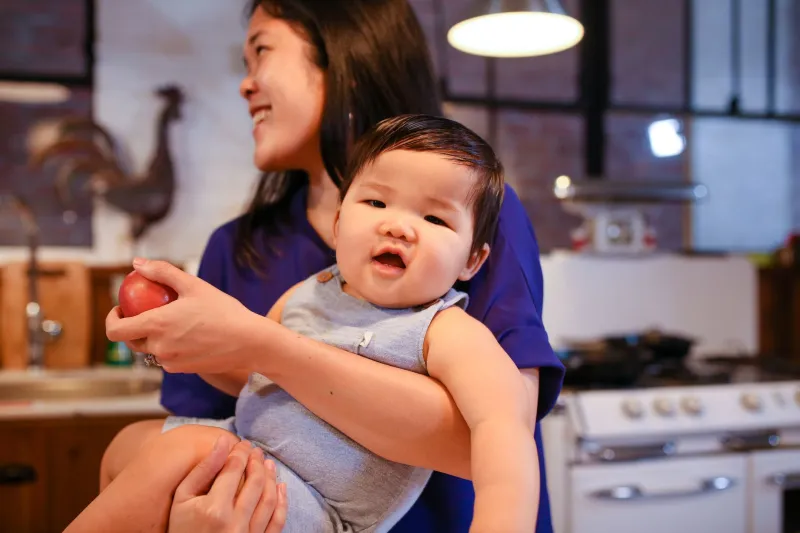
My mother never once said, "I'm overwhelmed and I need help." Not once. Not in forty years of raising kids, managing a household, holding down a job, and fielding phone calls from relatives in three different time zones. What she did say, frequently and with devastating precision, was a single sharp exhale through her nose followed by a very specific silence. And every single person in our house knew exactly what that meant.
We were not fine.
But we were also, in the way that mattered most, going to be fine. Because that's the other thing about brown mom communication—it carries both the problem and the solution in the same breath. The sigh says I am at my limit. The fact that dinner is still on the stove and the laundry is still getting folded says but I am not stopping. Both things, always, at once.
I've been thinking about this a lot lately. About the emotional vocabulary I inherited and the one I'm passing down. About what our coded language actually means—to our partners, to other brown moms who can read us like a first language, and most importantly, to our kids who are absorbing all of it in real time.
The Phrase That Contains Multitudes
Let's start with the classic: It's fine.
If you are a brown mom, or you were raised by one, or you have spent significant time in proximity to one, you know that "it's fine" is not a statement of fact. It is a genre. It contains entire emotional landscapes. Depending on the delivery, it can mean:
- It is not fine, but I have accepted that no one is going to fix it.
- It is not fine, and I am keeping score.
- It is actually fine, but I want you to ask me one more time to be sure.
- I am too tired to explain why it is not fine, so we're calling it fine.
- Please don't make this a whole thing right now.
The tone does all the heavy lifting. The slight flatness in the voice. The absence of eye contact. The way the subject gets changed immediately after. Other brown moms hear this and respond accordingly—offering chai, redirecting the conversation, or simply sitting closer. It's a whole dialect, fluent and efficient.
Our partners, depending on how long they've been paying attention, may or may not have learned to read it. Our kids? They're learning right now, whether we realize it or not.
What We Inherited and What We're Passing Down
Brown motherhood, across South Asian, Middle Eastern, Latinx, African, and so many other communities, often comes packaged with a particular relationship to emotional expression. We were raised by women who were raised by women who survived genuinely hard things—immigration, loss, scarcity, displacement, discrimination—without the luxury of processing it out loud. Stoicism wasn't a personality trait. It was a survival strategy.
The result is a communication style that is layered, indirect, and deeply culturally intelligent. We don't always name what we feel. We signal it. We express love through food instead of words, concern through unsolicited advice, disappointment through pointed silence. We say "eat something" when we mean "I love you" and "did you call the doctor yet?" when we mean "I'm scared for you."
There's real beauty in this. There's also real cost.
Because the same patterns that let us function under pressure—the minimizing, the pushing through, the reflexive "I'm fine" even when we're running on empty—can become invisible walls. Between us and our partners. Between us and our own ability to recognize when we actually need support. And between us and our kids, who are watching us manage everything alone and learning that this is simply what mothers do.
The Sigh That Raises Children
Here's the thing nobody puts in the parenting books: your kids are not just learning from what you tell them. They are learning from your exhales.
They see you take the call from the difficult relative and say "of course, no problem" and then go very quiet for the rest of the evening. They watch you absorb the news that plans have changed, that something's broken, that someone needs something, and they watch you pivot without complaint. They notice that you never ask for help before you've already done the thing yourself.
And they're taking notes.
Some of what they're learning is genuinely valuable. Resilience. Resourcefulness. The ability to keep going when keeping going is the only option. These are not small things. These are gifts.
But some of what they're learning is the part we might want to examine more carefully. Are they learning that emotions are something to be managed rather than expressed? That asking for help is a last resort? That the right response to stress is to go quiet and handle it? Are our daughters, in particular, learning that this is what womanhood looks like?
I'm not asking these questions to generate guilt—lord knows brown moms have enough of that on hand. I'm asking them because I think most of us, if we're honest, have wondered.
The Humor That Holds Everything Together
Before this gets too heavy, let's talk about the other side of brown mom emotional language: the absolutely devastating humor.
Because we are funny. We are so funny. The dry one-liner delivered without looking up from the stove. The sarcastic "no, no, don't worry about me" that somehow communicates both genuine exhaustion and affectionate exasperation at the same time. The group chat with other brown moms where we send voice notes about our days and collapse into laughter over the specific absurdity of our lives.
This humor is not a deflection from our feelings. It is our feelings. It's how we hold the hard stuff up to the light and say: look at this. Isn't this something? Aren't we something, for getting through it?
The knowing eye roll shared between two brown moms at a family gathering is a whole conversation. It says: I see you. I know. Me too. We're going to be okay. Isn't this ridiculous? In five seconds, with no words, complete emotional solidarity.
That's not dysfunction. That's a highly evolved communication system.
Learning a Few New Words
None of this is an argument for abandoning the language we inherited. It's an argument for expanding it.
Because our kids need to see us say "I'm tired and I need a minute" out loud. Not instead of the stoicism, but alongside it. They need to see that naming a hard feeling doesn't break you—it actually makes the load lighter. They need to hear us ask a partner for help before we've already handled everything ourselves. They need to know that "it's fine" is sometimes an invitation to push a little, to ask again, to sit down next to us and just be there.
And honestly? We need that too.
We can keep the sigh. We can keep the coded language and the group chat humor and the love expressed through food and the gold standard of the knowing look across a crowded room. These things are ours. They're beautiful. They're part of who we are.
We can just maybe, sometimes, also say the thing out loud.
Starting with: I'm not fine. And I could use some help.
See how that feels. I'll wait.