Feed the Whole Family for Less: The Budget Kitchen Wisdom Brown Moms Have Always Known
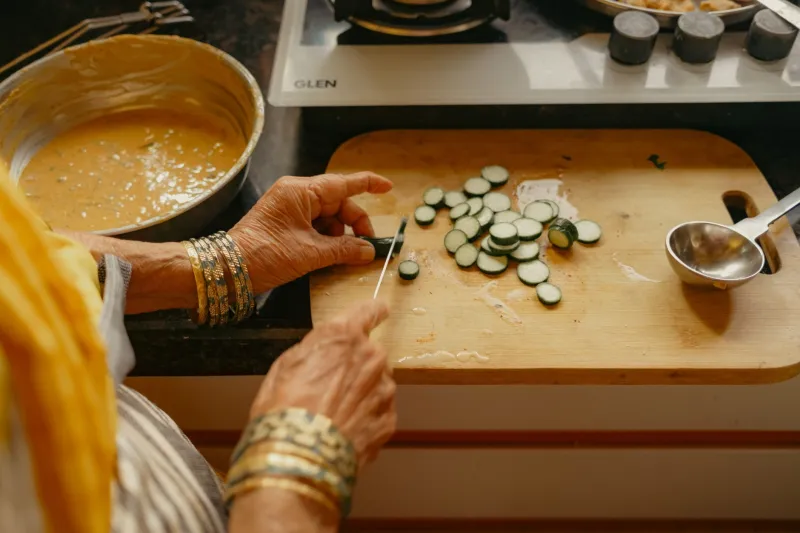
Let's be honest for a second. When a lifestyle influencer posts about feeding her family of four on a tight budget, she's usually talking about buying rotisserie chicken from Costco and calling it a "hack." Meanwhile, brown moms have been quietly running entire household economies out of a single kitchen for generations, armed with nothing more than a pressure cooker, a 10-pound bag of rice, and an almost supernatural ability to make yesterday's leftovers taste better than the original meal.
This isn't a trend. This is a tradition. And it's about time we talked about it properly.
The Mindset Before the Method
Before we even get into the practical stuff, it's worth pausing on something important: the way brown moms think about food is fundamentally different from how mainstream American food culture operates. We weren't raised to think of groceries as individual meals. We were raised to think of them as a system.
A whole onion isn't just an onion. It's the base of a curry, the start of a soup, the flavor foundation of rice, and — if things get creative — part of a quick pickle on the side. That mental flexibility, that ability to see an ingredient for everything it could become rather than just what it is right now, is the core skill. And most of us absorbed it so naturally from watching our mothers and grandmothers cook that we don't even realize it's a skill at all.
It is, though. A genuinely valuable one.
The Pantry Is Your Savings Account
Ask any brown mom where she'd rather spend her grocery budget, and she'll tell you: the pantry, not the fridge. Perishables are unpredictable. A bag of spinach goes bad before Thursday. A rotisserie chicken is great until it isn't. But a well-stocked pantry? That's stability.
The staples worth investing in when they're on sale include:
- Dried lentils and legumes — dal, chana, rajma, moong. These are protein-dense, filling, and absurdly inexpensive per serving.
- Whole spices — cumin seeds, mustard seeds, coriander, turmeric, cardamom. Buying whole and grinding yourself stretches the flavor much further than pre-ground blends.
- Basmati or long-grain rice in bulk — yes, that 20-pound bag is worth the upfront cost.
- Canned tomatoes — they behave almost identically to fresh in cooked dishes and they're shelf-stable.
- Frozen vegetables — peas, spinach, mixed vegetables. Nutritionally comparable to fresh and zero waste.
With these on hand, you can build a meal on any given night without a grocery run. That convenience is its own form of savings.
The Art of the Transforming Ingredient
Here's where the real magic lives: the single ingredient that becomes multiple meals across the week without anyone at the table feeling like they're eating the same thing twice.
Take a whole chicken. Brown mom math says that's not one dinner — that's three. Night one: roasted or pressure-cooked with masala, served over rice. Night two: the leftover meat pulled and folded into a quick quesadilla or flatbread wrap with chutney. Night three: the carcass becomes a rich, golden broth that's the base for a vegetable soup or a pot of khichdi. Nothing wasted. Everything stretched.
Or consider chickpeas. Saturday they're chana masala. Sunday the leftovers get mashed slightly and stuffed into parathas. Monday whatever's left gets tossed cold into a salad with cucumber, tomato, and lemon. Three completely different eating experiences, one can of chickpeas (or a batch soaked from dry, which is even cheaper).
This is the mental model: never see a leftover as a leftover. See it as a starting point.
Substitution Without Sacrifice
One of the most underrated budget skills brown moms carry is the ability to substitute without losing flavor or nutrition. This is something home cooks in the US are often afraid of — we follow recipes like contracts. But when you've grown up watching someone cook by feel, by smell, by instinct, substitution becomes second nature.
Some swaps worth knowing:
- Greek yogurt for heavy cream in creamy sauces — same richness, more protein, significantly cheaper.
- Frozen spinach for fresh in any cooked dish — and you skip the wilting step entirely.
- Dried beans for canned — requires planning ahead with a soak, but costs a fraction of the price.
- Chicken thighs for chicken breast — more flavorful, more forgiving in cooking, and almost always cheaper per pound.
- Cabbage for more expensive vegetables in stir-fries and sabzis — it holds up beautifully and absorbs spice wonderfully.
The key insight here is that flavor comes primarily from technique and spice, not from premium ingredients. Once you internalize that, the whole grocery store looks different.
Planning Without a Spreadsheet
Formal meal planning — the kind with color-coded charts and Sunday prep sessions — is having a moment right now. And look, if that works for you, great. But brown mom planning has always been more intuitive and arguably more effective.
It looks something like this: you know what's in your pantry, you check what's on sale or what's about to turn in your fridge, and you build from there. No rigid plan, just a loose framework. You're making dal tonight because the tomatoes need to be used. You're doing a rice dish tomorrow because there's leftover rice from last night. You're doing something with that half-used can of coconut milk before the week is out.
This responsive style of planning actually reduces waste more effectively than a rigid plan, because you're constantly adapting to what you have rather than buying new ingredients to fit a predetermined menu.
Feeding Kids Without Running a Separate Kitchen
One of the biggest budget leaks in American family cooking is the separate kids' meal. Mac and cheese for the kids, something else for the adults. That's two meals, twice the cost, twice the effort. Brown moms have largely resisted this trap — not always by choice, but the outcome is the same.
Kids raised on dal and rice, on sabzi and roti, on everything that comes out of one pot and lands on everyone's plate, tend to be more adaptable eaters over time. Are there battles? Absolutely (see: the great plain pasta incident at Nani's house). But the default isn't a separate menu, and that saves real money over the course of a week.
If you're trying to move away from the dual-meal situation, the trick is gradual integration — a small portion of the family meal alongside something familiar, flavor levels adjusted slightly, textures considered. It takes time, but the payoff is a household where everyone eats the same food.
The Real Currency Here
Here's the thing that doesn't get said enough: what brown moms do in the kitchen isn't just about saving money. It's about resourcefulness as a form of love. It's about feeding people well when the budget doesn't cooperate. It's about honoring an ingredient by using every part of it. It's about carrying forward a kind of practical wisdom that no cooking class teaches and no meal kit service can replicate.
So the next time someone acts impressed that you fed your family of five a genuinely good meal for under $30, you don't have to explain the math. You've always known it. Your mother knew it before you. And someday, if you're lucky, your kids will know it too — standing in their own kitchens, looking at a bag of lentils and seeing infinite possibility.