One Pot, Infinite Possibilities: The Secret Kitchen Math Every Brown Mom Already Knows
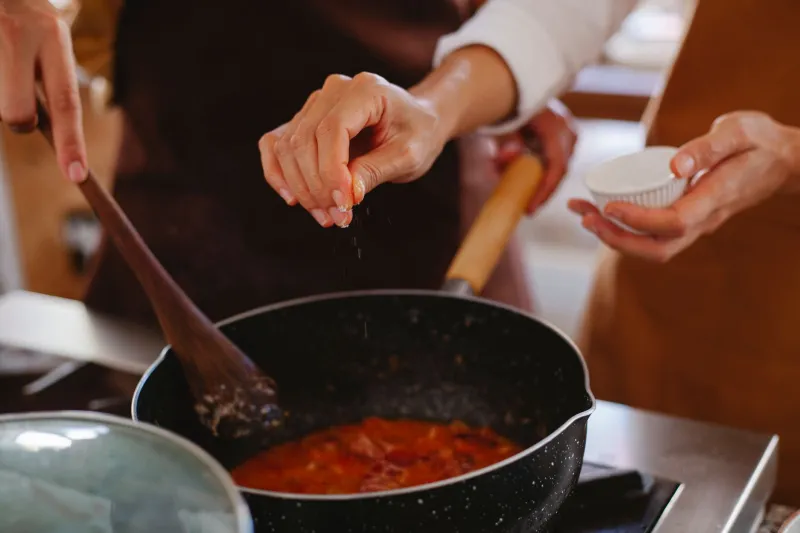
Nobody taught me this in any formal way. There was no lesson, no handwritten recipe card, no Pinterest board. But somewhere between watching my nani stretch a pot of dal across three meals and trying to feed my own kids on a Tuesday night with exactly one onion and half a can of tomatoes, I learned the math. The sneaky, beautiful, deeply practical math of the brown mom kitchen.
It goes something like this: one big pot of curry on Sunday equals dinner tonight, lunch tomorrow, a completely different dish by Wednesday, and if you're really skilled, a whole new meal by Friday that your kids will swear they've never eaten before. Spoiler: they have. They absolutely have.
It Starts on Sunday (It Always Starts on Sunday)
The anchor meal is everything. Whether it's a big batch of chicken curry, a pot of chana masala, or a slow-cooked dal makhani, Sunday's cook is really Monday through Friday's insurance policy. Brown moms don't meal prep in the way that wellness influencers mean when they post color-coded containers on Instagram. We meal prep in the way our mothers did—intuitively, pragmatically, and with an eye toward what can be transformed rather than just reheated.
That chicken curry? On Sunday it's served over basmati with a side of roti. By Tuesday, the leftover chicken gets shredded and folded into a quesadilla for the kid who's currently rejecting all things South Asian. By Thursday, what remains of the gravy becomes the base for a quick soup with some added broth and a handful of whatever vegetables are about to turn in the fridge. Nothing is wasted. Nothing is sacred. Everything is potential.
The Leftover Whisperer
There's a specific kind of culinary improvisation that brown moms practice that doesn't have an official name, but should. Call it leftover alchemy. Call it fridge archaeology. Call it whatever you want—the point is that we look at a container of three-day-old aloo sabzi and see opportunity where other people might see a trash-can situation.
That aloo sabzi? Smash it slightly, add some green chutney, stuff it into a paratha, and you've just made your kid's lunch look like something from a food truck. Add an egg and pan-fry it into a hash, and suddenly it's a weekend breakfast. Mix it into a wrap with some yogurt sauce and cucumber, and your non-brown mom friend at school pickup is going to ask for the recipe like you invented something new. You didn't. Your grandmother did, probably sixty years ago, out of necessity.
The genius of this system is that it doesn't feel like recycling. It feels like cooking. Because it is cooking—just cooking that respects what came before it.
Budget Without the Sacrifice
Let's talk about the economics of this for a second, because they matter. Feeding a family in America right now is genuinely expensive. Grocery bills are brutal. And while a lot of the meal-prep content online assumes you have a Whole Foods budget and a weekend afternoon free for elaborate prep sessions, brown mom kitchen math operates on different terms entirely.
A two-pound bag of dried lentils costs almost nothing and becomes the backbone of multiple meals. A whole chicken, broken down at home, goes so much further than buying pre-packaged breasts. Spices bought in bulk from the Indian grocery store—where a large bag of cumin costs less than a tiny jar at the regular supermarket—add enormous flavor for almost no additional cost. The cultural pantry of a brown mom household is, functionally, a budget superpower.
And because the flavor is built into the cooking itself rather than into expensive sauces or pre-seasoned proteins, you don't need to spend more to eat well. You just need to know the math.
The Kids Don't Always Know (And That's Kind of the Point)
Here's the part that brown moms don't always say out loud but absolutely know: the repurposing works best when it's invisible. Your seven-year-old does not need to know that the "new pasta" you made tonight started its life as a tomato-based curry gravy. Your teenager does not need to know that the filling in those tacos is last night's keema with a little cumin added and a lime squeezed over the top.
This isn't deception. This is parenting. It's understanding that the same child who pushed away the curry on Monday will happily eat the exact same flavors on Wednesday if they're presented in a different wrapper—literally or figuratively. Brown moms have been doing this forever. We just didn't call it a "hack."
What We Inherited Without Knowing It
The thing that gets me, when I really think about it, is how much of this I absorbed without ever being explicitly taught. I watched my mom cook. I watched my aunties cook. I was in the kitchen while adults made decisions about what to do with what was left, how to make something from what seemed like nothing, how to feed people generously without spending extravagantly.
That knowledge lives in my hands now. It shows up when I'm standing in front of the open fridge at 6 p.m. with no plan and somehow, twenty-five minutes later, there's a full meal on the table. It shows up in the way I shop—always thinking two or three meals ahead, always buying the thing that can become multiple things.
It's not magic. It's generations of women being resourceful under pressure, and passing that resourcefulness down in the most practical way possible: by just doing it, every single day, in front of us.
The Modern Twist
Now, we're adding our own layer to this tradition. We're using Instant Pots to cut down the time. We're googling fusion recipes that let us use our curry base in ways our grandmothers never imagined. We're texting each other in group chats asking "what do I do with this dal that's been in the fridge since Saturday" and getting five creative answers back within minutes.
We're also, finally, giving ourselves credit for something that used to just be called "cooking" but is actually a sophisticated system of efficiency, creativity, and cultural preservation all at once.
So the next time someone asks how you manage to cook interesting food every night without losing your mind or your budget, you can just smile. Or you can explain the math. Either way, you already know the answer—and you learned it from the best.