When Your Kid Orders Plain Pasta at Nani's House: The Picky Eater Problem No One Warned Us About
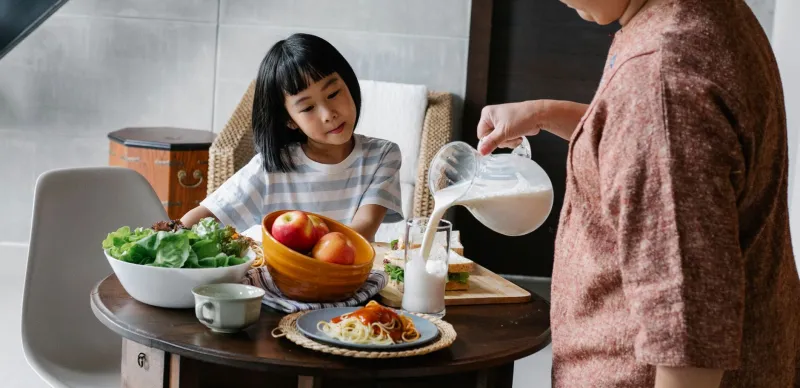
Let me paint you a picture. It's Sunday. You've spent the better part of two hours making your mother's chicken karahi — the one with the whole spices you have to fish out before serving, the one that smells like every good memory you have. You set it on the table. Your kid takes one look at it, wrinkles their nose like you've personally offended them, and asks if there's cereal.
Cereal.
You did not survive immigration, assimilation, and a decade of packing biryani in a thermos for school lunch just to raise a child who prefers Cheerios over your grandmother's recipe. And yet, here we are.
If this sounds familiar, you are not alone. Brown moms across the country are quietly navigating what I like to call the Desi Dinner Divide — that strange, sometimes funny, often gut-wrenching moment when you realize your child has become the pickiest eater at a table full of food you'd have killed for growing up.
How Did We Get Here?
Here's the thing nobody really talks about: picky eating in brown kids isn't just about taste preferences. It's about assimilation pressure, and it starts way earlier than you'd think.
The moment your child walks into an American preschool and sees their classmates eating Lunchables and goldfish crackers, the social calculus begins. Food becomes identity. And for a kid who already feels caught between two worlds, choosing the "American" food is sometimes the easiest way to feel like they belong somewhere.
Dr. Jennifer Anderson, a pediatric feeding specialist, has noted that children between ages two and six go through a natural phase of food neophobia — a fear of new foods. But for brown kids, that developmental quirk collides with cultural messaging that says spices are "weird," that strong smells are "gross," and that the default meal is something beige and mild. They're not just being picky. They're absorbing a world that has spent decades telling them their parents' food is the other kind.
And we internalized some of that too, didn't we? Let's be honest.
The Guilt Is Real (And It's Heavy)
There's a specific kind of brown mom guilt that comes with this situation, and it doesn't get talked about enough. It's not just frustration that your kid won't eat what you cooked. It's the creeping fear that you're losing something — that the thread connecting your child to your mother's kitchen, to your grandmother's hands, to a whole lineage of women who fed their families with love and spice and intention, is fraying.
Food is how so many of us carry culture forward. It's the thing we can do even when the language slips, even when the holidays get abbreviated, even when the traditions get quietly edited down to fit into American life. When your kid rejects the food, it can feel like they're rejecting the whole story.
That's a lot to put on a four-year-old who just doesn't want turmeric in their eggs.
But here's what I want you to hear: your child's picky eating phase does not mean you've failed. It means you're raising a kid in a complicated cultural moment, and that is genuinely hard.
What Actually Works (From Moms Who've Tried Everything)
Brown moms are nothing if not resourceful, and the collective wisdom on this is actually pretty good. A few things that seem to move the needle:
Start with the familiar, then slide. A lot of moms swear by what I'd call the Trojan Horse method. Butter chicken is basically a creamy tomato sauce — and your kid already loves pasta in creamy tomato sauce. Start there. Serve it over rice or naan instead of making a big deal out of it. You're not tricking them, you're introducing them gently. There's a difference.
Get them in the kitchen. Kids are dramatically more likely to eat something they helped make. It doesn't have to be complicated. Let them stir the dal. Let them smell the cumin before it hits the pan. Give them ownership over the process and suddenly it's not scary foreign food — it's their food.
Stop the side dish spiral. A lot of us fall into the habit of making a separate "kid-friendly" meal alongside the real dinner, and while I completely understand why (hunger is real, mealtime battles are exhausting), it can accidentally reinforce the idea that desi food is the adult option they'll eventually opt out of. Try offering the main dish first, even just a small portion, before the backup plan.
Invite the grandparents to cook. There is something genuinely magical about a nani or dadi cooking with a grandchild that bypasses every power struggle you've been having at the dinner table. The relationship changes the experience. Suddenly it's not mom forcing something on them — it's Nani sharing a secret. That reframe matters.
Normalize talking about the food. Tell them the stories. Where the recipe came from. What you ate when you were their age. What your mom made when you were sick. Kids are meaning-making machines, and when food has a story attached to it, it becomes something more than just dinner.
Lowering the Stakes (Without Lowering Your Standards)
Here's the honest truth: some kids come around, and some take longer than you'd like. My cousin's daughter ate nothing but plain rice and buttered toast from ages three to seven and now, at fourteen, she's the one asking her mom to teach her how to make haleem. Taste buds change. Context changes. The goal isn't to win every mealtime battle. It's to keep the door open.
And sometimes, you let them have the cereal. Not because you're giving up, but because you're playing a long game. Because you know that culture isn't transmitted in a single dinner — it's transmitted over hundreds of them, over years, over the slow accumulation of smells and stories and Sunday afternoons in a warm kitchen.
You're not failing your heritage because your kid asked for mac and cheese tonight. You're doing the incredibly complex, incredibly unglamorous work of raising a child who belongs to more than one world.
That karahi will still be there tomorrow. Make it anyway. Eat it yourself if you have to. Let them see you love it.
That's the whole thing, really. Let them see you love it.
The Bigger Picture
The Desi Dinner Divide isn't just a parenting quirk — it's a microcosm of every tension brown families navigate in America. The push and pull between fitting in and holding on. The way assimilation asks you to quietly trade pieces of yourself for acceptance, and the way that trade gets passed down to your kids before they even know it's happening.
But food is stubborn. Culture is stubborn. And brown moms? Extremely stubborn.
We'll figure it out. One bite at a time.