The Kid-Swap Economy: Inside the Unofficial Childcare Network Brown Moms Built from Scratch
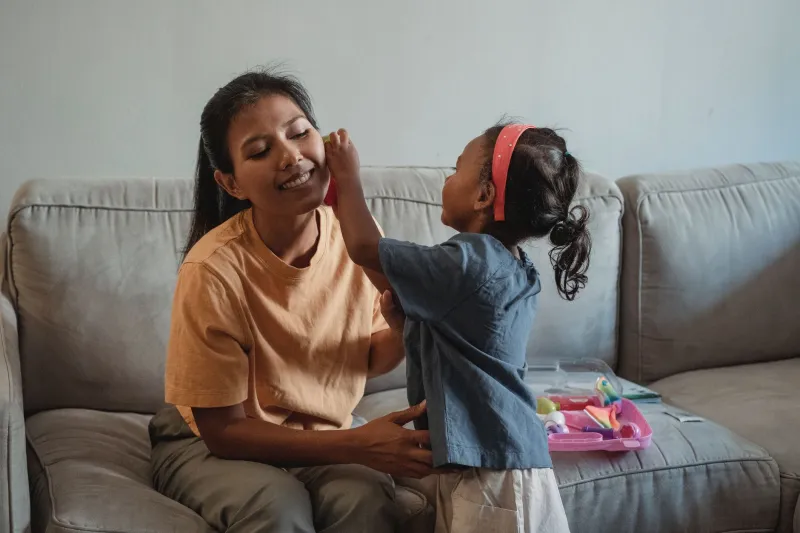
Somewhere in America right now, a brown mom is dropping her kids off at another brown mom's house with nothing more than a wave and a "I'll be back by seven." No written agreement. No emergency contact form. No Yelp review. Just the understanding — deep, mutual, and completely unspoken — that this is how it works. That this is what they do for each other.
And it works. Until it doesn't. And then it gets complicated.
The informal childcare network that brown moms build is one of the most functional, most underappreciated, and most emotionally loaded systems in our communities. It's also one of the least examined. So let's examine it.
How the Network Gets Built
It usually starts small. A neighbor watches your toddler while you run to a doctor's appointment. You return the favor two weeks later. Slowly, almost imperceptibly, a rhythm develops. Then an understanding. Then something that starts to resemble infrastructure.
The network grows through proximity — apartment complexes, neighborhoods, mosques, temples, gurdwaras, cultural associations. It grows through school pickups and potlucks and WhatsApp groups. It grows through the specific kind of community-building that brown families have always done, partly by necessity and partly because it's just how care works in many of our cultures. Children belong to the village. The village shows up.
By the time the network is fully operational, it might include three families, or ten. There are the moms who are always available and the ones who are harder to reach. There are the houses where the kids eat well and the ones where they come home wired on juice boxes. There are unspoken hierarchies about who coordinates, who initiates, and who tends to receive more than they give.
Nobody wrote any of this down. Everyone knows anyway.
The Rules Nobody Says Out Loud
Every informal childcare network runs on a set of operating principles that are never explicitly discussed but are absolutely understood by everyone involved. Violating them — even innocently — can fracture something that took years to build.
The first rule is reciprocity. Not dollar-for-dollar, not hour-for-hour, but a general sense that the giving and receiving roughly balance out over time. The mom who always needs coverage but never offers it will eventually find the network quietly closing around her. Nobody will say anything. The availability will just... shift.
The second rule is discretion. What happens in Auntie Fatima's house stays there. The kids who cried, the meltdowns, the snacks that got spilled on the good couch — these are absorbed and released without commentary. You don't report back unless something is actually wrong.
The third rule is flexibility without martyrdom. You show up when you say you will. You communicate if something changes. You don't leave someone waiting with no word. And you don't, under any circumstances, make the other mom feel guilty for needing you in the first place.
The fourth rule — and this one is the trickiest — is that you don't transactionalize it. The moment someone starts keeping a precise ledger, the whole thing starts to feel less like community and more like a co-pay.
After 9 PM, It Gets Complicated
Here's where the network gets tested. Evening coverage. Last-minute coverage. Coverage for the things that don't have a tidy explanation — the work emergency, the marriage tension, the mental health day you can't quite bring yourself to call by its actual name.
Brown moms are remarkably willing to cover for each other. We are also, quietly, remarkably aware of when we're being taken advantage of. And in communities where directness can feel culturally uncomfortable, that awareness sometimes festers instead of being addressed.
The resentments that build in informal childcare networks are real. The mom who always has a reason she can't reciprocate. The one who sends her kid over without feeding them first, consistently, and acts surprised when you mention it. The one who shows up an hour late to pickup, apologizes profusely, and then does it again the next month.
Because these aren't contractual relationships, there's no formal mechanism for addressing any of this. You either bring it up — which can feel like an accusation — or you absorb it until you quietly start being less available. The network adjusts. The friendship sometimes doesn't.
What Formal Childcare Doesn't Give You
For all its friction points, the informal network offers something that no licensed daycare or babysitting app can replicate: cultural fluency.
When your kid spends the afternoon at Deepa Auntie's house, they're not just being supervised. They're eating food that smells like home. They're hearing a language that might be fading from your own household. They're absorbing norms and values and ways of being that reinforce what you're trying to build at home.
That's not nothing. That's enormous. And it's the reason brown moms invest in these networks even when they're complicated, even when the reciprocity is imperfect, even when it would sometimes be easier to just call a babysitter.
The formal childcare system in America is expensive, logistically rigid, and culturally neutral at best. The informal network is free, flexible, and deeply specific. For families navigating identity and belonging, that specificity matters.
Giving Yourself Permission to Renegotiate
If there's one thing the informal childcare ecosystem could use, it's a little more honesty. Not the kind that blows things up, but the kind that keeps small frustrations from becoming permanent damage.
You're allowed to say you can't do Tuesday evenings anymore. You're allowed to say your capacity has changed. You're allowed to have a gentle, direct conversation with the friend whose pickups keep running late — because the alternative is slowly resenting someone you genuinely love.
And you're allowed to ask for help without performing a detailed justification for why you need it. Can you take the kids Saturday morning? is a complete sentence. You don't owe anyone a breakdown of your weekend.
The Village Is Real. So Is the Work of Keeping It.
The informal childcare networks brown moms build are a genuine marvel — practical, culturally rich, and rooted in a tradition of communal care that goes back generations. They work because of trust, and trust is built through showing up, following through, and occasionally having the uncomfortable conversation before the small thing becomes a big thing.
The village doesn't maintain itself. It takes tending. And the brown moms who tend it — who make the calls, send the texts, open their doors, and feed other people's children — are doing something that no app has figured out how to replace.
Here's to them. Here's to us.