Secondhand and Proud: How Brown Moms Turned Thrifting Into a Whole Philosophy
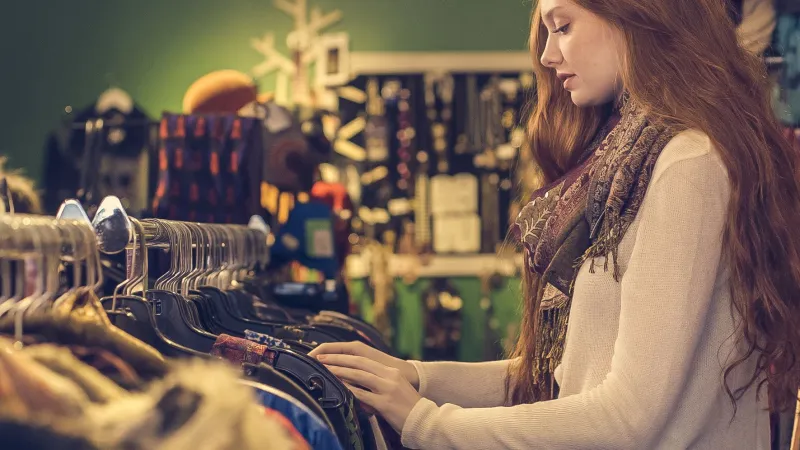
Let me paint you a picture. It's 1994. Your mom is folding a pair of jeans that once belonged to your cousin Priya, who got them from Auntie Reena's daughter, who definitely outgrew them two winters ago. Your mom holds them up, nods approvingly, and says something like, "These are perfectly good." No explanation needed. No apology offered.
Fast forward thirty years. You're scrolling through ThredUp at 11 PM, adding a barely-worn Gymboree jacket to your cart, and you feel... vaguely guilty? Like you owe someone an explanation? Like maybe you should've just bought the new one from Target so nobody asks questions at school pickup?
Here's the thing: that guilt doesn't belong to you. And it's time we talked about where it actually came from.
The Original Circular Economy Had a Brown Mom Running It
Before sustainability became a lifestyle brand, brown households were already operating their own closed-loop systems. Clothes cycled through cousins. Toys got passed from one birthday party to the next. Furniture moved between apartments when someone got married or moved states. Nothing useful was ever thrown away if it could be cleaned, repaired, or repurposed.
This wasn't poverty culture — although economic necessity was absolutely part of the story for many immigrant families. It was wisdom culture. A deep, inherited understanding that things have value beyond their newness. That a good sweater is still a good sweater whether it came from a department store or your neighbor's garage sale.
Our mothers and grandmothers didn't need a documentary about fast fashion to understand that buying less and using more was just... sensible. They already knew.
So Why Does Secondhand Still Carry Shame?
Here's where it gets complicated. Because alongside all that resourcefulness came a very real pressure — especially for immigrant families trying to establish themselves in America — to look like you were doing okay. To signal success. To give your kids what the other kids had, even if it stretched the budget to its absolute limit.
New backpack for school? Yes. New sneakers, even if they're on sale? Ideally. Because showing up with worn-out things sometimes felt like showing up with your vulnerability on full display.
That tension — between the inherited wisdom of reusing and the aspirational pressure of providing new — is something so many brown moms are still quietly navigating. We were raised by women who could stretch a dollar into a week's worth of meals, but we also watched those same women hide the price tags or quietly shop at discount stores so the neighbors wouldn't know.
The shame was never really about the clothes. It was about what the clothes were supposed to prove.
The Thrift Store Glow-Up Is Real, and Brown Moms Were Always Ahead of It
Something shifted culturally in the last decade. Thrifting went from being something you did quietly to something people actively brag about. Influencers post their Goodwill hauls. Depop is a whole economy. "Thrifted" is a flex now, not an explanation.
And honestly? Brown moms deserve to feel vindicated by this moment.
Because while some families are just now discovering the magic of secondhand shopping, we've been doing it for generations. We know how to spot quality stitching in a bin of tangled blouses. We know which items hold up through multiple wearings and which ones fall apart after two washes. We know that a good coat is a good coat, regardless of whether it has a receipt.
Modern brown moms are increasingly leaning into this — not just as a budget strategy, but as a genuine values statement. Buying secondhand is better for the environment. It's a vote against the disposable-everything culture that's choking our planet. It teaches kids that worth isn't determined by newness. These are things worth teaching.
The Hand-Me-Down Network Is Its Own Kind of Community
There's also something deeply relational about the way brown moms share clothing and goods within their communities. The text that says, "My nephew just outgrew a bunch of 4T stuff, do you need any of it?" isn't just practical — it's an act of care. It's saying, I thought of you. I know what you're managing. Here.
These exchanges create and reinforce bonds. They build the kind of community where people actually look out for each other, not just in crisis moments but in the ordinary, unglamorous moments of keeping kids clothed and fed and growing.
Of course, it can also get complicated. The hand-me-down that comes with invisible strings. The cousin who always gives but never receives and quietly keeps score. The auntie who donates things in rough condition and expects gratitude anyway. The community network is real and beautiful and occasionally exhausting. We can hold both.
Raising Kids Who Understand Value
One of the most powerful things about embracing secondhand culture intentionally — rather than apologetically — is what it models for our children. When we thrift without shame, we're teaching them that value isn't the same as price. That caring for things matters. That consuming less is a form of responsibility.
Kids who grow up understanding that the $4 jacket from the consignment store is just as warm as the $80 one from the mall are kids who are less likely to chase status through stuff. And in a world that is constantly marketing more at children from every angle, that's a genuinely radical thing to teach.
You don't have to make it a lecture. You just have to stop apologizing for your choices.
Reclaiming the Narrative
The brown mom secondhand shuffle has always been about more than money. It's been about ingenuity, community, sustainability, and a quiet refusal to waste what still has life in it. The only thing that's changed is that the rest of the world is finally catching up to what our mothers already knew.
So the next time you score a perfect barely-worn pair of shoes at the thrift store, or pass along your kid's outgrown winter coat to someone who needs it, or gratefully accept a bag of hand-me-downs from a friend — do it without the footnote. Do it without the explanation.
You're not making do. You're doing exactly right.